Tips for success:
- Clip the growing tips often to prevent legginess.
- Use distilled or filtered water to prevent leaf spotting.
Uses: Excellent for seasoning meats, stuffing, and sauces. Sage tea is also a traditional remedy for sore throats and inflammation.
7. Stevia (Stevia rebaudiana)
Why it’s perfect: Stevia, the natural sweetener plant, grows easily from cuttings and thrives in water indoors.
How to grow:
- Cut a 5-inch stem, remove lower leaves, and place in water near a sunny window.
- Roots typically appear in 7–10 days.
Tips for success:
- Harvest leaves before flowering for maximum sweetness.
- Use fresh leaves or dry them for a natural sugar substitute.
Uses: Stevia leaves can sweeten tea, coffee, desserts, and smoothies – with zero calories.
8. Tarragon (Artemisia dracunculus)
Why it’s perfect: French tarragon can be tricky from seed but grows well from cuttings in water.
How to grow:
- Take 4-inch cuttings in spring or early summer.
- Place them in water near a sunny window.
Tips for success:
- Change water weekly and harvest before flowering.
- Tarragon prefers cooler indoor temperatures.
Uses: Adds a subtle anise flavor to sauces, eggs, fish, and poultry. It’s also used to improve digestion and appetite.
9. Chives (Allium schoenoprasum)
Why it’s perfect: Chives are one of the easiest herbs to grow in water, regenerating quickly after cutting.
How to grow:
- Snip a clump of chives and place the roots in water.
- They grow best in bright light or near a sunny windowsill.
Tips for success:
- Replace water frequently to prevent odor.
- Trim regularly to encourage new growth.
Uses: Chives add a mild onion flavor to salads, soups, eggs, and dips. They’re also rich in antioxidants and vitamins A and C.
10. Lemon Balm (Melissa officinalis)
Why it’s perfect: A relative of mint, lemon balm thrives in water and offers a refreshing citrus aroma.
How to grow:
- Take 4-inch cuttings and remove the lower leaves.
- Place them in water in bright but indirect light.
Tips for success:
- Pinch back often to prevent flowering (which can reduce flavor).
- Keep the water clean – lemon balm roots quickly.
Uses: Lemon balm tea reduces stress, improves sleep, and soothes digestion. Fresh leaves make great garnishes for desserts and drinks.
11. Cilantro (Coriandrum sativum)
Why it’s perfect: Cilantro (or coriander leaves) can be propagated from cuttings and grown in water for continuous harvest.
How to grow:
- Cut 3–4-inch stems and place them in a sunny windowsill.
- Change water weekly and harvest frequently.
Tips for success:
- Cilantro prefers cooler conditions – avoid direct afternoon sun.
- Recut new stems from regrowth to extend harvest time.
Uses: Essential in Mexican, Indian, and Middle Eastern cooking. Cilantro is also detoxifying and helps remove heavy metals from the body.
12. Parsley (Petroselinum crispum)
Why it’s perfect: Parsley is rich in nutrients and grows well in water with regular care.
How to grow:
- Take a 4- to 5-inch cutting and remove the lower leaves.
- Place it in water and keep it in bright, indirect sunlight.
Tips for success:
- Replace water often and harvest regularly.
- Parsley takes longer to root (3–4 weeks) but produces lush growth once established.
Uses: A powerful detoxifier and immune booster, parsley is great in soups, sauces, salads, and herbal teas.
Tips for Success When Growing Herbs in Water
While water-grown herbs are low-maintenance, a few best practices can help them thrive year-round:
- Rotate containers weekly for even sunlight and growth.
- Use dark containers or wrap jars to reduce algae buildup.
- Add a drop of liquid fertilizer every 4–6 weeks to replenish nutrients.
- Trim regularly – harvesting encourages new growth.
- Avoid cold drafts or heat sources – temperature fluctuations stress plants.
Common Mistakes to Avoid
- Using unfiltered chlorinated water: It can stunt root development.
- Leaving water stagnant: Leads to bacterial growth and root rot.
- Placing herbs in direct hot sun: It can overheat and damage roots.
- Overcrowding jars: Give each cutting space for roots to grow freely.
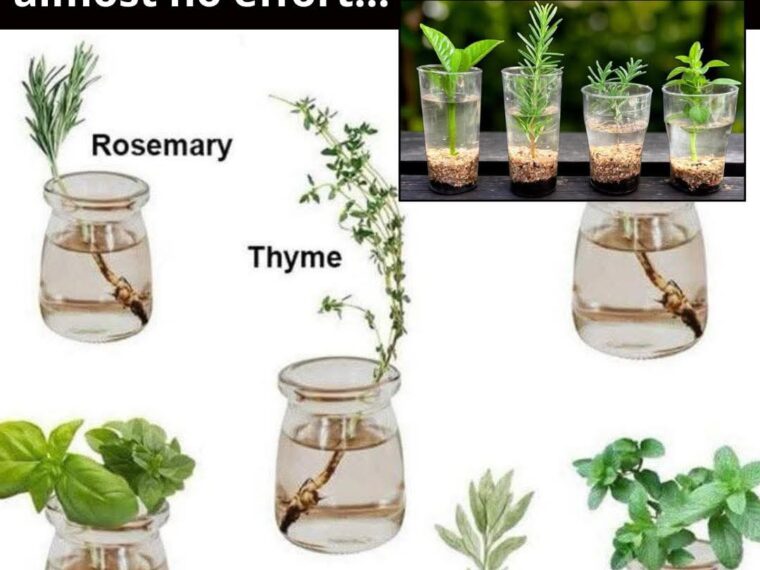
Growing herbs in water is one of the easiest and most rewarding ways to enjoy fresh, organic, homegrown ingredients year-round.
With just a few glass jars, a sunny windowsill, and regular water changes, you can create a thriving indoor herb garden – no soil, no mess, no hassle.