Planting herbs, flowers, and shrubs can be deeply rewarding, but for many gardeners—especially beginners—the process can also feel slow, uncertain, and sometimes frustrating.
Whether it’s the long germination period of seeds or the inconsistent success rate, starting plants from scratch isn’t always ideal.
Fortunately, there’s a faster, more reliable alternative: propagating plants from cuttings.
By using cuttings, you can clone a healthy parent plant, ensuring the same traits, growth patterns, and yield—often with faster results.
Plus, this technique allows you to multiply your favorite plants for free, share them with friends, and keep your garden lush and full, season after season.
Why Grow Plants from Cuttings?
Growing plants from cuttings offers multiple advantages over seed propagation:
- Faster growth: Cuttings are already mature tissues and root quickly.
- Genetic consistency: New plants are exact replicas of the parent plant.
- Free plant stock: Save money by creating more plants from the ones you already own.
- Useful when seeds are unavailable: Some species don’t produce viable seeds.
- Higher success rate in certain species when compared to seed germination.
What You Need to Know Before Taking Cuttings
To grow successfully from cuttings, it’s essential to understand:
- The types of cuttings you can take
- How to properly root your cuttings
- Which plants grow best from cuttings
Types of Plant Cuttings
Different plants require different propagation methods. Here are the most common types of cuttings used in home gardening:
. Hardwood Cuttings
- Taken from mature, woody stems in fall or winter.
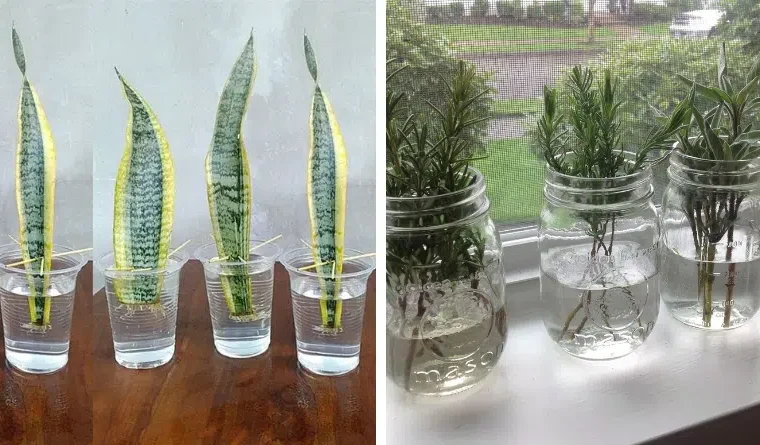
- Ideal for deciduous trees, shrubs, and some herbs like rosemary.
- Typically rooted over winter and ready to plant in spring.
2. Softwood Cuttings
- Taken in spring from new, tender growth.
- Root quickly and are used for many herbs and flowers like basil and fuchsia.
3. Semi-Ripe Cuttings
- Taken in mid to late summer from partially matured stems.
- Require warm conditions to root and are useful for plants like sage.
4. Heel Cuttings
- Include a piece of older wood (heel) from the parent plant.
- Often used for woody perennials like holly or rosemary.
5. Tip Cuttings
- Taken from the growing tips (4–8 inches long).
- Ideal for fast-growing plants like lavender, geranium, and basil.
6. Basal Cuttings
- Taken from the base of a shoot, close to the main stem.
- Best for perennials like delphiniums and phlox.
7. Leaf Cuttings
- Used for succulents, begonias, and snake plants.
- Entire new plants can form from the leaves alone.
8. Stem Section Cuttings
- Used for cane-forming plants like dumb cane and Chinese evergreen.
- Cut evenly into sections and laid horizontally for rooting.
9. Root Cuttings
- Taken from the root rather than the stem.
- Ideal for plants like horseradish and California tree poppy
TO CONTINUE READING THE ARTICLE PLEASE SEE PAGE 2