How to Root Your Cuttings
Rooting cuttings requires a moist, sterile environment and careful handling. Here’s how to do it effectively:
1. Let Cuttings Callus (If Needed)
- For fleshy stems (like succulents), allow the cutting to dry for 1–2 days to form a protective callus before planting.
2. Use the Right Medium
- Avoid regular garden soil. Use a mix of peat moss, perlite, and sand to promote moisture retention and drainage.
3. Avoid Fertilizers at the Start
- Fertilizers can burn unrooted cuttings. Use rooting hormone instead if needed, especially for hardwood cuttings.
4. Maintain High Humidity
- Cover cuttings with a plastic dome or bag to create a greenhouse effect. This reduces water loss and boosts rooting success.
5. Keep the Environment Moist but Not Soggy
- Excess water leads to rot. Water lightly and ensure drainage.
20 Plants That Are Easy to Grow from Cuttings
Here’s a list of 20 plants that root well from various types of cuttings and thrive when propagated this way.
1. Lavender
- Cutting Type: Tip cuttings (3–4 inches)
- Best Time: Late spring to early summer
- Method: Use softwood tips from non-flowering stems. Remove lower leaves and dip the base in rooting hormone. Insert into a tray filled with a 50/50 mix of sand and peat moss.
- Rooting Time: 3–4 weeks in a cold frame or under humidity dome
2. Rosemary
- Cutting Type: Heel or basal cuttings
- Best Time: Spring (softwood) or fall (semi-hardwood)
- Method: Take 4–6 inch cuttings, remove lower leaves, and place in a small pot with sandy compost. Cover with a plastic bag or dome to maintain humidity.
- Tip: Keep the plant warm and avoid direct sunlight while rooting.
3. Rose
- Cutting Type: Hardwood cuttings
- Best Time: Fall to early winter
- Method: Cut 6–8 inch segments from mature stems. Remove flower heads and plant two-thirds into the soil. Keep in a cold frame or protected bed.
- Watering: Keep moist but not soggy through winter.
4. Thyme
- Cutting Type: Tip cuttings
- Best Time: Mid to late summer
- Method: Use 3-inch cuttings. Remove leaves from the bottom half, dip in rooting hormone, and place in moist potting mix. Cover loosely with plastic to retain humidity.
- Rooting Time: 2–3 weeks
5. Comfrey
- Cutting Type: Root cuttings
- Best Time: Spring or fall
- Method: Take 2–3 inch root sections from a mature plant. Plant horizontally 2 inches deep in a well-prepared garden bed. Cover with compost or mulch.
- Tip: Keep the soil moist until shoots appear.
6. Basil
- Cutting Type: Tip cuttings (4–6 inches)
- Best Time: Anytime during the growing season
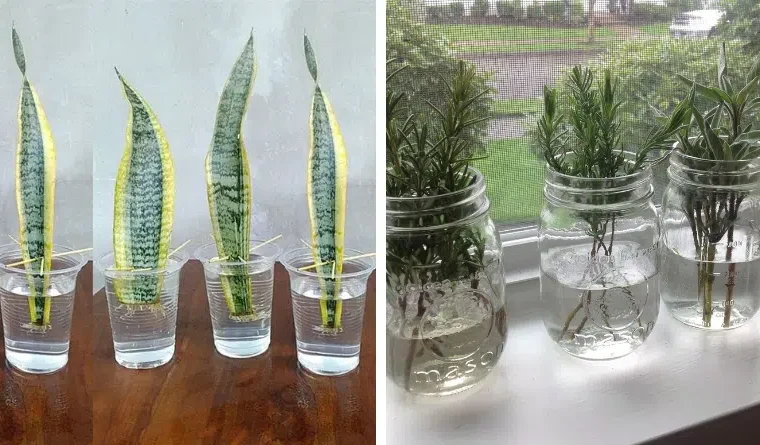
- Method: Cut non-flowering stems below a node. Remove lower leaves and place in a jar of water near a sunny window. Transplant when roots are 1–2 inches long.
- Tip: Change water every 2–3 days.
7. Snake Plant (Sansevieria)
- Cutting Type: Leaf cuttings
- Best Time: Spring to summer
- Method: Cut 2–3 inch leaf segments. Let dry for 1–2 days to callus. Place upright in moist cactus mix or start in water. Note: variegation may not carry over unless you propagate from rhizome sections.
- Rooting Time: 4–8 weeks
8. Holly
- Cutting Type: Semi-hardwood or hardwood
- Best Time: Fall
- Method: Use 6-inch cuttings from female plants. Dip in rooting hormone and place in moist peat-sand mix. Cover with plastic to retain humidity.
- Rooting Time: 8–12 weeks
9. African Violet
- Cutting Type: Leaf cutting with stalk
- Best Time: Year-round indoors
- Method: Cut a young leaf with 1-inch stalk. Insert stalk at an angle into moist peat-perlite mix. Cover with a plastic bag and place in indirect sunlight.
- Rooting Time: 3–5 weeks, baby plants appear at base
10. Geranium (Pelargonium)
- Cutting Type: Tip or stem cuttings (3–6 inches)
- Best Time: Late summer or early spring
- Method: Cut below a node, remove lower leaves and flowers. Let dry for a few hours before planting in a peat-free potting mix.
- Tip: Water sparingly until roots develop.
11. Fuchsia
- Cutting Type: Softwood (4–6 inches)
- Best Time: Early spring
- Method: Take non-flowering tips with 2–3 leaf pairs. Dip in hormone and root in a mix of compost and perlite. Keep covered and warm.
- Blooming: Plant outside in summer when established.
12. Sage
- Cutting Type: Semi-ripe basal cuttings
- Best Time: Late summer to early fall
- Method: Cut stems near the base with woody tissue. Root in sandy, well-drained mix, and keep in a cool but not cold location.
- Transplant: Outdoors in spring.
13. California Tree Poppy (Romneya)
- Cutting Type: Root cuttings (3-inch pieces)
- Best Time: December
- Method: Place horizontally in trays filled with compost and sand. Cover lightly and keep cool and moist.
- Transplant: After shoots appear in early summer.
14. Horseradish
- Cutting Type: Root cuttings (4–6 inches)
- Best Time: Spring
- Method: Plant sections vertically, root end down, 1 foot apart in well-drained soil.
- Harvest: After the first frost in fall.
15. Weigela
- Cutting Type: Softwood (spring), semi-ripe (summer), or hardwood (fall)
- Best Time: Late spring for green cuttings
- Method: Remove lower leaves, dip in rooting hormone, and plant in perlite and compost. Keep moist and warm.
- Note: Fall hardwood cuttings should overwinter before planting in spring.
16. Hydrangea
- Cutting Type: Tip cuttings (4–6 inches with 3–4 leaves)
- Best Time: Summer
- Method: Remove bottom leaves, dip stem in rooting hormone, and plant in a moist peat-perlite mix. Cover with plastic to retain humidity.
- Rooting Time: 3–4 weeks
17. Aluminum Plant (Pilea cadierei)
- Cutting Type: Tip cuttings
- Best Time: Spring and summer
- Method: Remove 4–6 inch growing tips and root in moist soil. Use high humidity and indirect light.
- Tip: Pinch tips to encourage bushy growth after rooting.
18. Dumb Cane (Dieffenbachia)
- Cutting Type: Tip cuttings or stem cane sections
- Best Time: Spring
- Method: Allow tip cuttings to callus for 1–2 days. Plant upright in pots. For cane cuttings, lay horizontally in trays filled with compost and peat, cover lightly with mix.
- Note: Keep warm and covered until shoots appear.
19. Chinese Evergreen (Aglaonema)
- Cutting Type: Tip or stem cuttings
- Best Time: Late spring to summer
- Method: Use 3-inch stem sections, lay horizontally in moist sand and peat. Cover with clear plastic to create a humid environment.
- Rooting Time: 4–6 weeks
20. Philodendron
- Cutting Type: Tip cuttings with 2–3 nodes
- Best Time: Spring or summer
- Method: Remove lower leaves and place in water or moist potting mix. Nodes should be submerged or covered for rooting.
- Tip: Can also root by layering for large vines.
Mastering plant propagation by cuttings allows you to replicate your favorite herbs, flowers, shrubs, and houseplants with ease.
By selecting the right cutting type, using proper rooting media, and maintaining the right humidity and temperature, you can enjoy a garden full of thriving, cloned plants—without the wait or cost of growing from seed.
Whether you’re growing indoor houseplants, outdoor ornamentals, or culinary herbs, these 20 detailed methods will help you become a cutting propagation pro.
Pages: 1 2