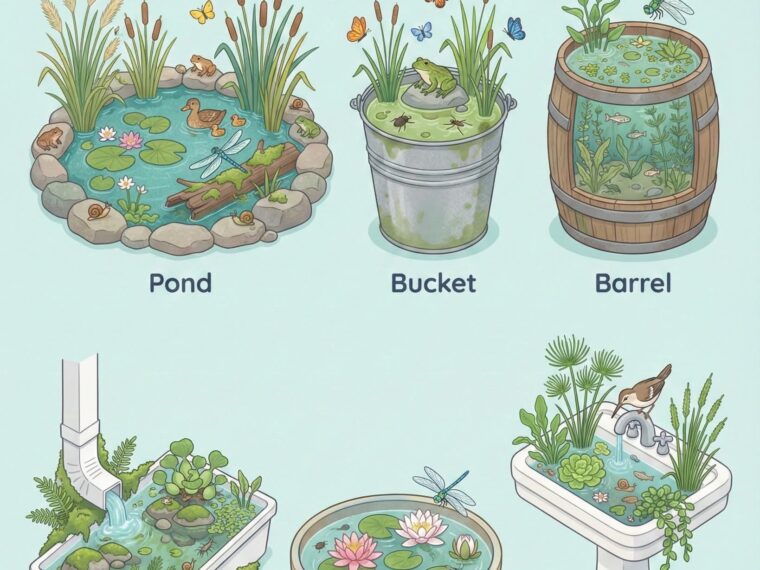
Did you know you can fight biodiversity loss with just an old bucket or sink? 🌿🐸 It’s called a Mini-Wetland, and it is one of the single most impactful things you can do for your local ecosystem.
We often think we need a massive garden to dig a pond, but the truth is, 80% of freshwater wildlife can thrive in tiny bodies of water. The image below shows 6 tested ways to create these “pocket ponds.”
Here is the REAL, tested method on how to build one that actually works (and won’t turn into a smelly mess). 👇
🛠️ HOW TO BUILD A MINI-WETLAND (Step-by-Step)
- Choose Your Vessel As seen in the image, you can use almost anything:
Old Sinks: Perfect depth and usually have a plug you can seal with silicone.
Barrels/Buckets: Great for depth, but ensure they are watertight. Note: If using a wooden barrel, line it with a pond liner so toxins from the wood don’t leach into the water.
Large Bowls/Pots: Ideal for patios or balconies.
- The “Goldilocks” Location ☀️ Don’t put it in deep shade (nothing will grow) or scorching full sun (water will evaporate and algae will explode).
The Sweet Spot: A place that gets sun for part of the day but is shaded during the hottest afternoon hours.
- The Setup (Crucial Step!)
Do NOT use garden soil. It contains too many nutrients and will instantly turn your water green with algae.
Use: Clean gravel or pebbles on the bottom. If planting, use special aquatic compost topped with grit to stop it floating away.
The Wildlife Ramp: This is non-negotiable! You MUST provide a way out. Birds and hedgehogs will try to drink and can fall in. Use a pile of stones, a log, or a branch that breaks the surface so they can climb out.
- The Water 💧
Best: Rainwater (collected from a butt or bucket).
Okay: Tap water, if you let it sit in a bucket for 24-48 hours first so the chlorine evaporates.
- The Plants (The Engine Room) You need a balance to keep the water clear without a filter.
Oxygenators (The Cleaners): These live underwater and produce oxygen. Example: Hornwort (Ceratophyllum).
Floating Plants (The Shade): They cover the surface to stop algae. Example: Frogbit or a Dwarf Water Lily (Nymphaea ‘Pygmaea’).
Marginals (The Ladders): Tall plants that stick out of the water. Dragonflies use these to climb out and transform. Example: Lesser Spearwort or Flowering Rush.
🚫 COMMON MYTHS BUSTED
“I should add fish.” ❌ FALSE. In a mini-wetland, fish will eat all the insect larvae and their waste will pollute the small volume of water. These are for wildlife, not goldfish!
“It will attract mosquitoes.” ❌ MOSTLY FALSE. A healthy pond attracts predators like damselfly larvae and water beetles that eat mosquito larvae. Mosquitoes prefer stagnant, lifeless water—not a thriving mini-wetland.
🦋 WHAT WILL ARRIVE?
If you build it, they will come. Usually within weeks!
Dragonflies & Damselflies: Will lay eggs on the plant stems.
Birds: Will use it as a bath and drinking station.
Frogs & Newts: May use larger containers (like the sink or pond style) to cool off.
Bees: Will drink from the shallow edges (use moss or stones so they don’t drown).
📸 Image Guide:
Top Left: In-ground micro pond (classic).
Top Middle: Bucket pond (perfect for renters).
Top Right: Barrel pond (great for viewing underwater life if you have a glass panel, otherwise great for depth).
Bottom Left: Drainpipe wetland (uses runoff water—super sustainable).
Bottom Middle: Bowl pond (perfect for table-tops).
Bottom Right: Sink pond (a classic upcycle project).
Save this post for your weekend project! Which one would you try? 👇