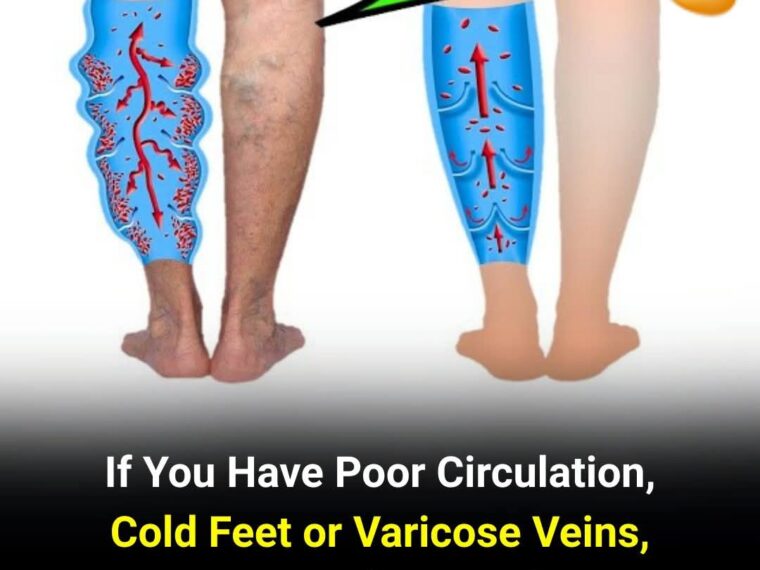
💡 Suffering from Poor Circulation, Cold Feet, or Varicose Veins? These 6 Daily Habits Can Help Improve Blood Flow
Do your feet feel cold even in warm weather? Do you notice swollen legs, visible veins, or frequent numbness and tingling? Poor blood circulation is a common problem, especially among adults who sit or stand for long periods, older individuals, and people with certain lifestyle habits.
The good news is that simple daily habits can significantly improve blood flow, reduce discomfort, and support healthier veins. Let’s explore six practical habits you can start today.
Understanding Poor Circulation
Poor circulation happens when blood doesn’t flow efficiently through your arteries and veins. This can lead to symptoms such as:
- Cold hands or feet
- Swelling in legs or ankles
- Varicose or spider veins
- Leg pain, cramps, or heaviness
- Numbness or tingling
Left unaddressed, circulation issues can worsen over time, so prevention and daily care are essential.
1. Move Your Body Every Day 🚶♀️
Movement is one of the most powerful ways to improve circulation.
Why it helps:
When you move, your muscles help push blood back toward the heart, preventing pooling in the legs.
What to do:
- Walk for at least 20–30 minutes daily
- Stretch your legs and ankles if you sit for long periods
- Try gentle exercises like yoga, cycling, or swimming
Even short, frequent movement breaks make a big difference.
2. Elevate Your Legs 🛋️
Leg elevation helps blood flow against gravity, reducing swelling and pressure in the veins.
How to do it:
- Raise your legs above heart level for 15–20 minutes
- Do this once or twice a day
- Use pillows or lie against a wall
This habit is especially helpful for people with varicose veins or swollen ankles.
3. Stay Well Hydrated 💧
Dehydration thickens the blood, making it harder to circulate.
Benefits of proper hydration:
- Improves blood flow
- Reduces leg cramps
- Helps prevent clot formation
Tip:
Drink water consistently throughout the day, not just when you feel thirsty.
4. Eat Foods That Support Circulation 🥗
What you eat has a direct impact on your blood vessels.
Circulation-friendly foods include:
- Leafy greens (spinach, kale)
- Citrus fruits (oranges, lemons)
- Berries (rich in antioxidants)
- Fatty fish (omega-3s)
- Garlic, ginger, and turmeric
These foods help reduce inflammation, strengthen blood vessels, and improve overall blood flow.
5. Avoid Sitting or Standing Too Long ⏳
Staying in one position for extended periods slows circulation, especially in the legs.
What you can do:
- Stand up and move every 30–60 minutes
- Flex your ankles and calves while sitting
- Shift your weight if standing for long hours
Small adjustments throughout the day can prevent blood pooling.
6. Wear Comfortable Clothing and Footwear 👟
Tight clothing can restrict blood flow, especially around the waist, thighs, and legs.
Helpful tips:
- Avoid tight pants or socks that leave deep marks
- Choose supportive, comfortable shoes
- Consider compression stockings if recommended by a professional
Proper clothing allows blood to circulate freely.
Bonus Tip: Keep Your Feet Warm 🧦
Cold temperatures cause blood vessels to constrict, reducing circulation.
- Wear warm socks in cool environments
- Avoid cold floors
- Massage feet gently before bed
Warmth encourages healthy blood flow.
When to See a Doctor
While lifestyle changes help many people, seek medical advice if you experience:
- Severe or sudden swelling
- Persistent pain
- Skin discoloration
- Open sores on legs or feet
These could be signs of more serious circulation problems.
Final Thoughts
Poor circulation, cold feet, and varicose veins are not just cosmetic concerns—they’re signals from your body. The good news is that daily habits matter, and small changes can lead to big improvements over time.
By staying active, eating well, hydrating, and caring for your legs, you can support better blood flow and enjoy healthier, more comfortable days.
Disclaimer
This article is for informational purposes only and does not replace professional medical advice.