Correct Ways to Carry Your Cat: How to Hold Them Safely and Comfortably
Cats may look independent, but how you handle them matters more than many people realize. Carrying a cat incorrectly can cause stress, fear, or even injury. Understanding the right way to pick up and hold a cat helps build trust, keeps both you and your pet safe, and ensures your cat feels secure rather than restrained.
This guide explains the safest and most comfortable ways to carry your cat — and what to avoid.
Why Proper Handling Is Important
Cats are flexible but not indestructible. Incorrect lifting or carrying can:
- Strain the spine or joints
- Cause fear or defensive scratching
- Damage trust between you and your cat
- Lead to sudden jumps or falls
A cat that feels supported and safe is far more likely to stay calm in your arms.
Before You Pick Up Your Cat
Always check your cat’s mood first.
Signs your cat is okay being carried:
- Relaxed body posture
- Tail still or gently moving
- Slow blinking
- Approaching you voluntarily
Signs you should not pick them up:
- Flattened ears
- Swishing tail
- Growling or hissing
- Tense body or trying to escape
If your cat resists, respect their boundaries.
Correct Ways to Carry Your Cat
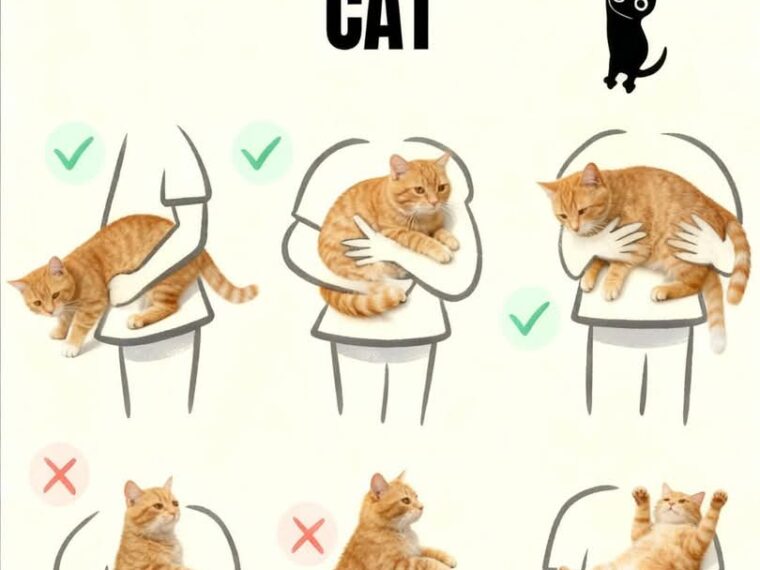
1. The Two-Handed Chest Hold (Best for Most Cats)
This is the safest and most recommended method.
How to do it:
- Place one hand under your cat’s chest, just behind the front legs
- Use your other hand to support the back legs and hindquarters
- Hold your cat close to your body
Why it works:
- Fully supports the spine
- Prevents dangling legs
- Makes cats feel secure
2. The Shoulder Hold (For Calm, Trusting Cats)
Some cats enjoy sitting on your shoulder like a parrot.
How to do it:
- Lift your cat using the two-handed chest hold
- Gently place them against your shoulder
- Support their back legs with one hand
Important:
- Only for cats that are calm and used to being held
- Not safe for nervous or young cats
3. The Cradle Hold (For Short Periods)
This resembles holding a baby.
How to do it:
- Support the back and hips
- Keep your cat’s body horizontal
- Hold them close to your chest
Best for:
- Short cuddles
- Calm, affectionate cats
Avoid this if your cat struggles or twists.
4. The Towel Wrap (For Nervous or Wiggly Cats)
Also called a “kitty burrito.”
How to do it:
- Wrap your cat gently in a towel
- Leave the head exposed
- Support their body underneath
Best for:
- Vet visits
- Nail trimming
- Anxious cats
What NOT to Do When Carrying a Cat
TO CONTINUE READING THE ARTICLE PLEASE SEE PAGE 2