Supports Respiratory Health
Vapor from bay leaf oil is traditionally used for chest congestion, coughs, phlegm, bronchitis, and sinus inflammation. Its cineole content works similarly to eucalyptus.
Antibacterial and Antifungal
Bay leaf oil suppresses harmful microbes on the skin and may assist in treating fungal infections, acne, and minor wounds.
Skin Support
With its antioxidants and antibacterial qualities, bay leaf oil has been used for eczema, rashes, irritation, and supporting skin regeneration.
Stress and Relaxation
Bay leaf aroma contains linalool, which has soothing effects on the nervous system, helping reduce mental tension and promote sleep.
How to Make Bay Leaf Oil At Home (Traditional Method)
This remedy can be made with either fresh or dried bay leaves, but dried leaves are usually preferred because they infuse more slowly and evenly.
Ingredients:
- 10–15 bay leaves
- 1 cup of carrier oil (olive oil, almond oil, jojoba oil, grapeseed oil, or coconut oil)
Basic Preparation:
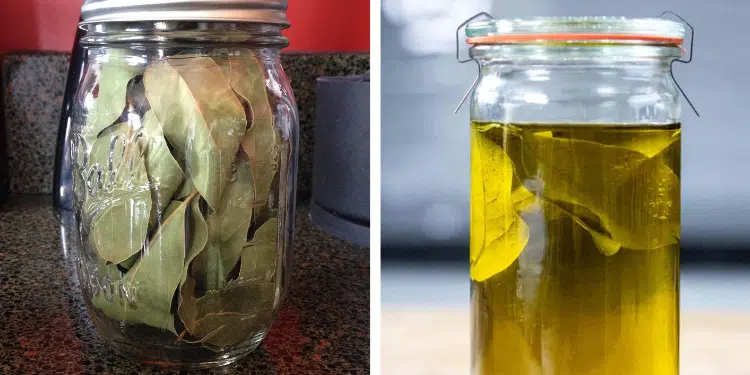
- Crush or break the bay leaves slightly to release their oils.
- Place them in a clean glass jar.
- Warm the carrier oil gently (do not boil).
- Pour the warm oil over the bay leaves until fully submerged.
- Seal the jar and let it infuse for 2 weeks in a dark cabinet.
- Shake occasionally.
- Strain through cheesecloth or a fine strainer.
- Store the finished oil in a dark glass bottle.
This is the traditional cold maceration technique used for generations.
Faster Variation: Warm Infusion Technique
If you want bay leaf oil in just 1–2 hours:
- Add bay leaves and oil to a heat-safe glass jar or small pot.
- Place the jar or pot into a pan of simmering water (double-boiler style).
- Heat over very low heat for 1–3 hours.
- Allow to cool, strain, and store.
This method extracts the active compounds quickly without destroying them.
How to Use Bay Leaf Oil
For Joint and Arthritis Pain:
Massage directly into knees, fingers, hips, wrists, or elbows twice daily. It works especially well after warm compresses or baths.
For Muscle Tension
Rub onto sore shoulders, lower back, calves, or neck and allow it to absorb before warming the area with a towel.
For Sciatica or Nerve Pain
Apply along the sciatic nerve pathway, buttocks, or lower back. Many people mix it with castor oil for deeper penetration.
For Chest Congestion
Rub onto the chest, neck, and upper back, then cover with a warm cloth.
For Sinus Relief
Place a few drops on a cloth and inhale or massage gently around the nose and forehead.
For Hair & Scalp Health
Massage into scalp to improve circulation, reduce dandruff, and strengthen hair roots.
For Skin Problems
Apply diluted to itchy, irritated, or inflamed areas, fungal patches, or dry skin.
For Stress and Sleep
Rub onto temples, neck, or chest before bedtime or use in aromatherapy.
Why It Works Better as Oil Than Whole Leaves
When bay leaves are added to food, only a small amount of their essential oils are released – and most of them evaporate in steam.
When infused into oil:
- The essential oils are preserved
- The medicinal compounds remain stable
- The oil absorbs into muscles and skin layers
- The warming effect enhances absorption
- The oil can be used externally for targeted relief
This is why bay leaf oil is far stronger than simply adding bay leaves to soup.
Shelf Life and Storage
Stored properly in a cool dark place, bay leaf oil lasts 6–12 months. It should be kept away from heat and sunlight to preserve its active compounds.
Dark amber bottles are ideal, but any airtight glass container will work.
Who Should Avoid or Use With Caution
People with severe allergies to laurel family plants should avoid bay leaf oil. Pregnant women, nursing mothers, and those with serious medical conditions should consult a professional before using concentrated herbal preparations. It is not for internal use in oil form.
Bay leaf oil may be one of the most overlooked natural remedies for pain and inflammation.
It bridges ancient wisdom with modern understanding, offering relief using a plant most people already have sitting in their kitchen.